
Submetering Company Subject to Regulation by PUCO as a Public Utility
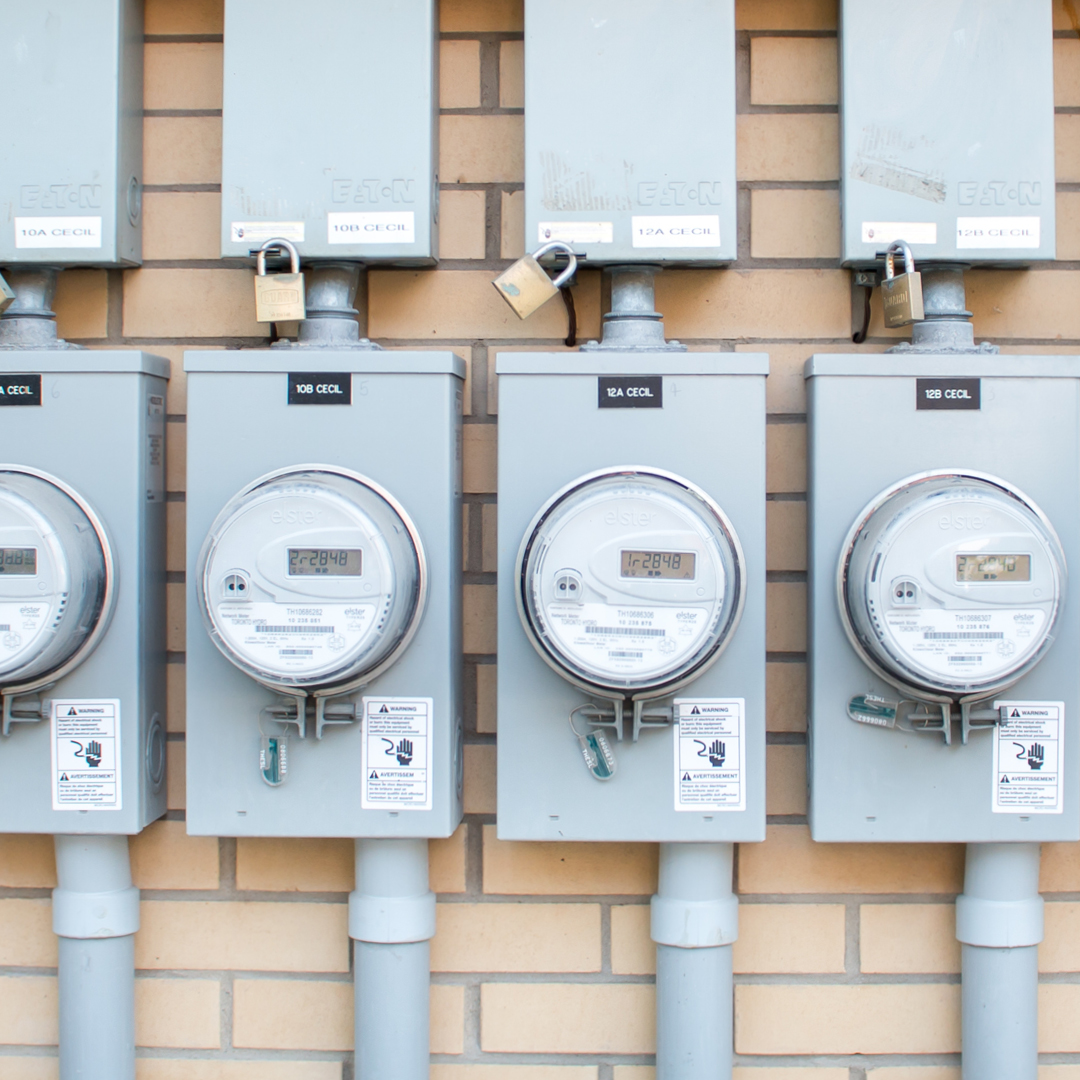
A submetering company, which sells electricity to apartment tenants, is a public utility subject to state regulation.
A submetering company that arranged with landlords to sell electricity to apartment tenants is a “public utility” subject to regulation by the Public Utilities Commission of Ohio (PUCO), the Supreme Court of Ohio ruled today.
The Supreme Court decision reversed a PUCO order that concluded that Nationwide Energy Partners (NEP), a submetering company, was not a public utility.
While originally a way for landlords to divide utility charges amongst tenants, submetering today is big business whereby third-party companies “buy[] gas, electric, and other services from a public utility and then resell[] those services to the ultimate consumer,” the opinion stated.
Under Ohio law, a provider of electricity is a public utility “when engaged in the business of supplying electricity for light, heat, or power purposes to consumers within this state.” Applying this definition, the PUCO rejected a request to regulate NEP as a public utility, finding that landlords, not tenants, are consumers of electricity, and that landlords supply electricity, while NEP is simply the landlord’s agent.
Writing for the Court majority, Justice R. Patrick DeWine explained that PUCO’s conclusion that NEP is not supplying electricity to consumers conflicts with the plain language of state law: “Tenants who purchase electricity are consumers of electricity and NEP is in the business of supplying electricity; therefore, NEP is a public utility.”
Chief Justice Sharon L. Kennedy and Justices Patrick F. Fischer, Daniel R. Hawkins, and Megan E. Shanahan joined Justice DeWine’s opinion. Eighth District Court of Appeals Judge Mary J. Boyle, sitting for Justice Joseph T. Deters, also joined the opinion. Justice Jennifer Brunner concurred in judgment only.
Public Utility Brings Complaint Against Submetering Company
In 2020, NEP contracted with the landlords of five large apartment complexes in the Columbus area for the exclusive right to supply electrical service to their tenants. Tenants were purchasing electricity from Ohio Power Company (AEP Ohio). NEP asked AEP to alter the meters to enable NEP to supply electricity. AEP denied the requests and then filed a complaint with PUCO, claiming that NEP was unlawfully operating as a public utility in violation of state law.
Under R.C. 4905.03(C), the PUCO’s jurisdiction extends to “an electric light company, when engaged in the business of supplying electricity … to consumers within the state.” The PUCO concluded it had no right to oversee NEP’s activities for two reasons: tenants were not “consumers” of electricity, and NEP was not “engaged in the business of supplying electricity.” AEP appealed the ruling to the Supreme Court.
Contracts Allowed Direct Service to Tenants
Under the contracts with landlords, NEP purchases electric generation service and then supplies electricity to individual tenants through its own wires and other equipment. NEP has “sole discretion” to select the source of electricity and can purchase it from a local default provider like AEP or an alternative source.
While AEP supplies electricity to the apartment complexes’ master meters, NEP supplies the wires, equipment, and individual apartment unit meters. It also maintains and reads the meters and bills the tenants for service. NEP sets the price it charges tenants and agreed not to charge more than the default rate for AEP's individual residential service. NEP makes a profit because it pays AEP’s lower commercial rate and resells it to tenants at a higher residential rate.
NEP also disconnects tenants who fail to pay their bills and offers payment plans for those who fall behind on their bills. “From the tenant’s perspective, NEP is for all practical purposes the supplier of their electricity,” the Court stated.
NEP Supplies Electricity to Consumers
Justice DeWine explained this is not the first time the Court had been asked whether NEP falls under the PUCO’s jurisdiction. In In re Complaint of Wingo v. Nationwide Energy Partners (2020), the Court reversed a PUCO order concluding NEP was not a public utility. In that case, rather than follow R.C. 4905.03(C), the PUCO made up its own test to determine whether it could regulate submetering companies and found it could not oversee NEP. After the Court ruled that the PUCO must apply state law to determine if NEP is a public utility, the tenant in the case dismissed her complaint against NEP, and no further action was taken.
In today’s case, the PUCO determined that, under R.C. 4905.03(C), tenants are not consumers, but rather landlords are consumers, and NEP merely assists landlords in reselling electricity.
Using the definition of consumer found in common dictionaries, the Court wrote, “Because the tenants consume or utilize electricity in their apartments, they fall within the plain meaning of ‘consumers.’”
While landlords might utilize utilities like water and electricity when they purchase utility services to resell to tenants, the tenants definitely use those services, such as water to clean their dishes and the electricity to light a room, the Court explained. Both can be consumers under the law, the Court ruled.
The PUCO also reasoned that there is a landlord-tenant exception under which a landlord is not deemed to be in the business of supplying electricity to tenants. The PUCO ruled that since NEP is the landlord’s agent, NEP also enjoys the exception.
The Court rejected the argument. It found there is no explicit landlord exception, but rather landlords are exempt when they resell utilities as an incidental part of renting their properties. When doing so, the landlords are not considered “in the business of supplying electricity,” the opinion noted.
This exemption, however, does not extend to NEP. Observing NEP purchased about $8.5 million of electricity annually from AEP to resell, the Court wrote, “Reselling electricity is by no means ‘ancillary’ to NEP’s business. Regardless of whether the landlords are in the ‘business of supplying electricity,’ there can be no question that NEP is in that business.”
The Court also found the PUCO’s conclusion that NEP is an agent of the landlords to be “suspect.” Describing NEP as the landlord’s agent in the contract does not mean an agency relationship exists, the opinion noted. The Court stated the hallmark of an agency relationship would include the landlord’s ability to “exercise the right of control over the actions” of NEP. But under the contracts, the landlords do not have a right to control NEP’s actions, the Court stated.
“A better characterization is that NEP is in a contractual relationship with the landlords in which it purchased from the landlords a monopoly right to resell electricity to their tenants,” the Court wrote.
Because NEP is a public utility, the PUCO has jurisdiction to regulate its activities, the Court concluded. It remanded the case to the PUCO for further proceedings.
2024-0207. In re Complaint of Ohio Power Co. v. Nationwide Energy Partners, Slip Opinion No. 2026-Ohio-1406.
 View oral argument video of this case.
Please note: Opinion summaries are prepared by the Office of Public Information for the general public and news media. Opinion summaries are not prepared for every opinion, but only for noteworthy cases. Opinion summaries are not to be considered as official headnotes or syllabi of court opinions. The full text of this and other court opinions are available online.
 PDF files may be viewed, printed, and searched using the free Acrobat® Reader
 Acrobat Reader is a trademark of Adobe Systems Incorporated.