
City Garage Operated by Private Management Entitled to Tax Exemption
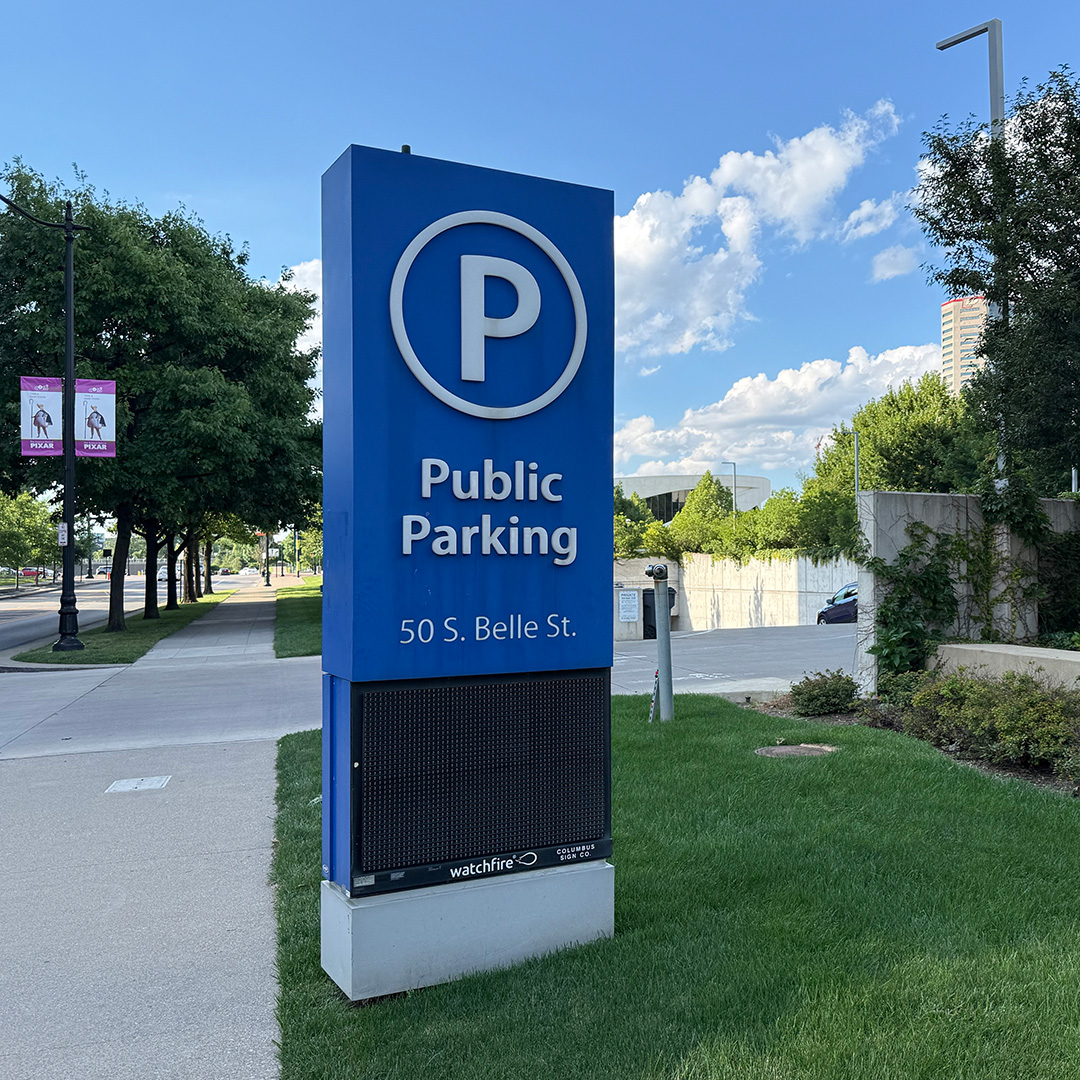
The Court ruled a parking garage near the Center of Science and Industry (COSI) in Columbus is tax exempt.
A Columbus nonprofit organization is entitled to a property tax exemption for a garage it operates near the Center of Science and Industry (COSI), the Supreme Court of Ohio ruled today.
In a 6-1 decision, the Supreme Court vacated an Ohio Board of Tax Appeals (BTA) ruling that the 600-space parking garage operated by RiverSouth Authority is not entitled to a property tax exemption. The BTA reasoned that through a series of contracts, the garage was under the control of private organizations and ineligible for an exemption granted to public property used exclusively for a public purpose.
Writing for the Court majority, Justice Megan E. Shanahan stated that the details of the various operational and management agreements revealed that the city of Columbus is ultimately in control of the garage, which qualifies the facility for a tax exemption.
Chief Justice Sharon L. Kennedy and Justices Patrick F. Fischer, R. Patrick DeWine, Joseph T. Deters, and Daniel R. Hawkins joined Justice Shanahan’s opinion.
Justice Jennifer Brunner concurred in part and dissented in part. She stated she would remand the case to the Ohio tax commissioner for further analysis.
Series of Agreements Led to Construction, Operation of Garage
Columbus acquired property on the Scioto Peninsula in 1989 near COSI. RiverSouth Authority was established as a government entity designated as a “new community authority” under R.C. 349.05. In 2016, the city leased land to RiverSouth to develop the garage.
The lease provided that RiverSouth would own the building and equipment associated with the garage. RiverSouth would then lease the garage back to the city. Under the terms of the agreement, Columbus would help RiverSouth secure a property tax exemption for the garage. But the city noted that if the garage were not tax-exempt, it would not pay any real estate taxes imposed on the site.
The city’s agreement with RiverSouth permitted the organization to engage companies with experience in parking facility management to operate the garage. Another agreement stated the city had “sole and exclusive right, license, and privilege to use and occupy” the garage.
In 2017, RiverSouth contracted with the private nonprofit Capital South Community Urban Redevelopment Corporation to manage and operate the garage. Capital South, in turn, hired LAZ Parking Midwest, a private for-profit business, to operate the garage on a daily basis.
Group Seeks Tax Exemption
In 2019, RiverSouth sought a property tax exemption. It stated it was entitled to an exemption under R.C. 5709.08(A)(1) because the garage was public property used exclusively for a public purpose. And citing R.C. 5709.121(A), it stated the property belonged to RiverSouth and met the requirement that it was public property under the direction and control of a political subdivision, the city of Columbus.
The tax commissioner denied the exemption. The commissioner ruled that because the private LAZ operated the garage, it lost its identity as public property used exclusively for a public purpose.
RiverSouth appealed to the BTA, which agreed with RiverSouth that LAZ’s involvement did not disqualify the property from an exemption. However, the BTA focused on Capital South’s role. It deemed that Capitol South was responsible for the garage and found there was no indication that Columbus was involved in the management or oversight of the garage.
RiverSouth appealed to the Supreme Court.
Supreme Court Analyzed Operational Agreements
Justice Shanahan explained the Court focused on whether the owner of property seeking a tax exemption that hires a management company to conduct the day-to-day activities retains direction and control of the property.
The Court examined provisions of the agreements between RiverSouth and Capitol South. While Capitol South was responsible for the operation, maintenance, protection, and repair of the garage, its agreement required Capitol South to obtain city approval for emergency repairs and certain costly operating expenses.
“By these terms in the agreement, the city retained direction or control over the operation, maintenance, protection, and repair of the garage,” the opinion stated.
The Court noted that while Capitol South set the hours of operation and rates, the city required the garage to be “reasonably available for use by members of the public.”
Terms of the agreement also restricted Capitol South’s use of parking payments to only paying its management fee, operating expenses, and payments to the city. And LAZ was required to submit a five-year budget to the city. The Court found that the garage’s finances were under the city's direction and control.
The Court also found other aspects of the agreement placed Columbus in control of the garage, and determined the facility was tax exempt. The Court directed the tax commissioner to exempt the property and to calculate any refund owed to RiverSouth for property taxes the organization had paid.
2025-0671. RiverSouth Auth. V. Harris, Slip Opinion No. 2026-Ohio-2396.
 View oral argument video of this case.
Please note: Opinion summaries are prepared by the Office of Public Information for the general public and news media. Opinion summaries are not prepared for every opinion, but only for noteworthy cases. Opinion summaries are not to be considered as official headnotes or syllabi of court opinions. The full text of this and other court opinions are available online.
 PDF files may be viewed, printed, and searched using the free Acrobat® Reader
 Acrobat Reader is a trademark of Adobe Systems Incorporated.