
Mediators Learn Modern Practices for Dispute Resolution
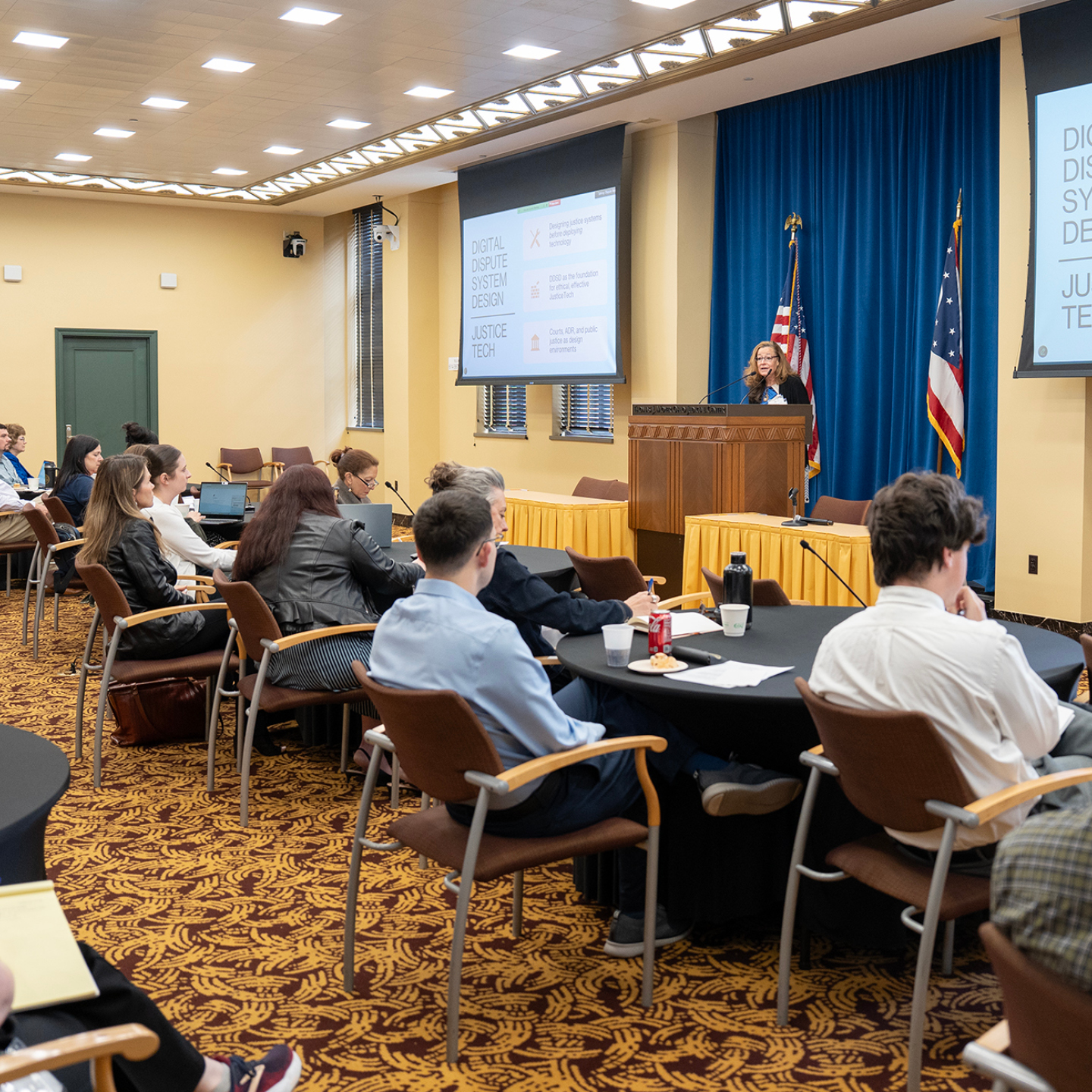
Court mediators learn the latest trends in the field during the Dispute Resolution Conference at the Supreme Court.
When emotions are running high and opposing parties in a case can’t seem to reach an agreement, mediation may be helpful. Mediators are neutral third parties who guide others as they settle their differences.
The Supreme Court of Ohio’s Dispute Resolution Section recently hosted a conference for mediators, allowing them to explore trending topics in the practice, hear from experts in the field, and share updates on case law and programs.
Topics included the use of artificial intelligence (AI) in dispute resolution, updates to the model standards for mediation, what’s new in programs around the state, and how revenge and forgiveness can impact mediation.
Mediation Meets AI
AI is shaping the legal landscape, and it's being applied to mediation. Professor Amy Schmitz of the Ohio State University Moritz College of Law stressed how important it is to focus on seeking justice rather than focusing solely on speed and efficiency when using AI.
Currently, mediators are using AI tools to help speed up intake and administrative tasks, and they are also using AI for creative purposes. For example, Schmitz said mediators might turn to a closed AI system when the participants are stuck and need to get ideas flowing again. AI can offer possible solutions for consideration during mediation. Schmitz cautioned that mediators must always utilize AI in a closed environment and be mindful of confidentiality concerns.
According to Schmitz, dispute resolution that relies on technology should ensure accessible and affordable access for all parties while providing them with the opportunity to be heard. Protecting the privacy and dignity of the participants is also essential when implementing new tools. She emphasized that technology, including AI, can assist people in resolving disputes, but it doesn’t replace professional responsibility and human judgment.
Breaking Barriers to Resolutions
Matthew Mennes, mediator for the Ninth District Court of Appeals, explained that some litigants and attorneys view themselves as victims in search of justice.
Mennes said litigation can be used as a form of revenge to inflict pain on others, but revenge can impede progress toward resolutions. As mediators, it is important to validate feelings but also help participants understand that prolonging a case often makes the pain last longer, he said.
“If lasting relief from pain is the underlying interest, then dispute resolution and ultimately forgiveness better serve that interest than short-term relief,” said Mennes.
He explained that the grievances and the hurt caused by litigation continue to compound the longer a case goes unsettled.
“Early mediation is the better path because the focus on revenge and being locked into that is less likely to happen if you get them early,” Mennes said.