Municipal Court Specialized Dockets Celebrate Spring Graduates
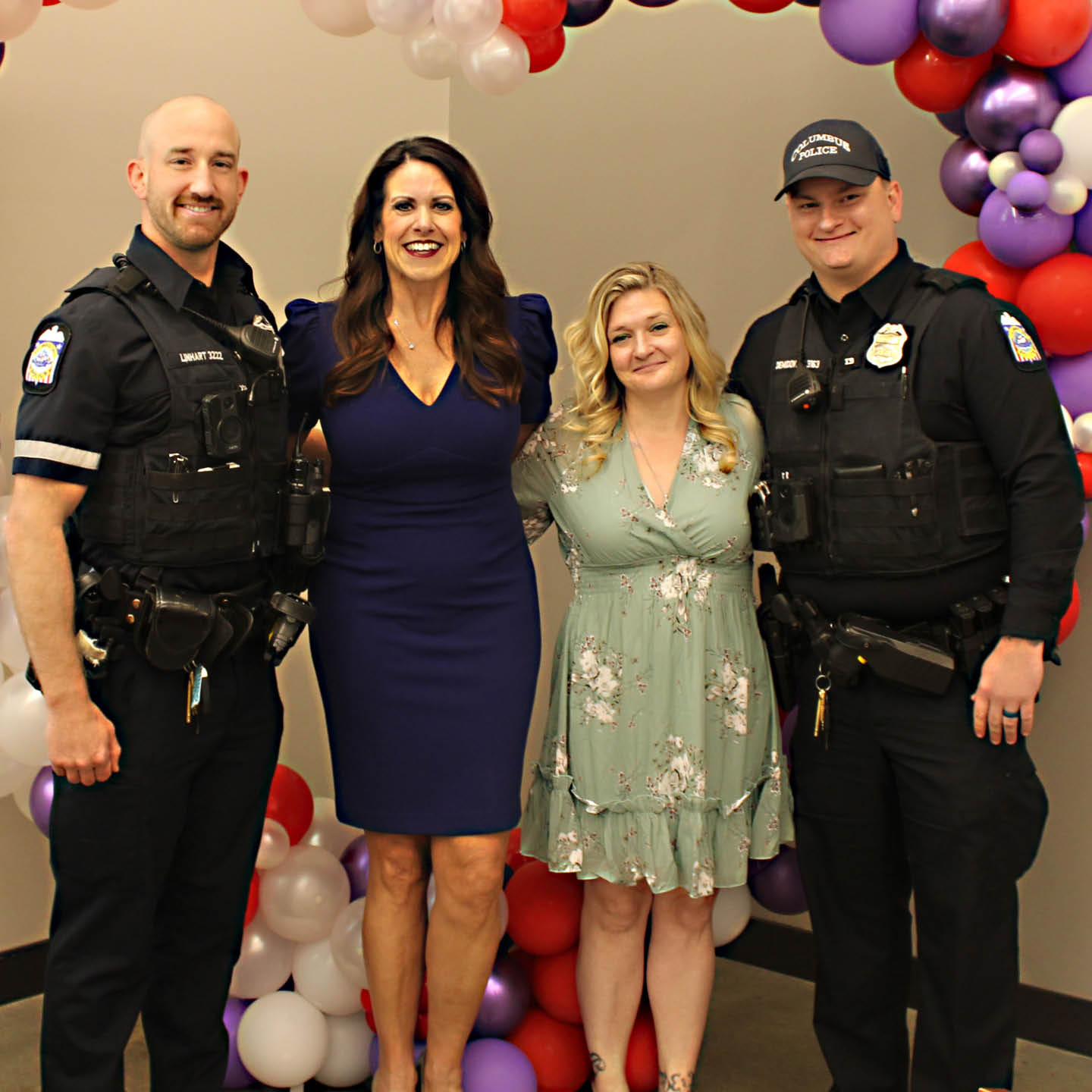
A graduate of Judge Jodi Thomas’ h.a.r.t. specialized docket invited her arresting officers to join in the celebration of her success in the program.
Three Supreme Court of Ohio-certified specialized dockets in Franklin County Municipal Court are celebrating 27 successful graduates.
Instead of serving their sentences in prison or jail, these individuals were offered opportunities through the court to learn new skills and habits, make connections with mentors, and achieve recovery from addiction.
Specialized dockets address the specific treatment needs of people facing certain criminal charges. Those dockets must use recommended best practices that focus on offender accountability, behavior change, and recovery. Courts that meet those standards can tailor their programs to meet their community’s needs and resources.
The three specialized dockets recognizing graduates are:
- MAVS (Military and Veterans Services), which is presided over by Judge Jarrod Skinner and focuses on helping veterans regain their discipline and overcome addiction, post-traumatic stress disorder (PTSD), and other challenges.
- h.a.r.t. (Helping Achieve Recovery Together), which is presided over by Judge Jodi Thomas, gives defendants with a history of treatment refusal or non-compliance the opportunity to engage in addiction treatment and earn a second chance at life.
- L.I.N.C. (Learning to Identify and Navigate Change), which is presided over by Judge Gina Russo, is a therapeutic alternative for those diagnosed with a mental illness. Participants spend their time receiving mental health and substance use treatment while working toward a more stable life.
This year, the MAVS court supported nine graduates, h.a.r.t. engaged 12, and L.I.N.C. led to the success of six. All were honored during graduation ceremonies.
According to Franklin County Municipal Court, the graduates spoke of different turning points in their lives that prepared them for healing. One graduate said he changed course when he faced a potential seven-year prison sentence for crimes he committed while he was addicted to opiates. He is now proud to be in a position to help his children. Another graduate invited two Columbus police officers to her ceremony, where she thanked them for their humanity toward her when she was arrested and for showing her that she needed to change.
The programs generally require a two-year commitment from participants and strict adherence to court guidelines for successful completion. Requirements include treatment, weekly meetings with the judge and court staff, and routine drug screenings. The programs teach life skills and connect participants with resources addressing housing, transportation, employment, and other barriers to recovery.
“These dockets emphasize accountability with compassion, helping participants rebuild a sense of self-belief through programs that help graduates succeed and remain in recovery,” the municipal court explained in a press release.
The court also operates two additional specialized dockets – Creating Autonomy through Collaborative Healing (CATCH), which serves survivors of sex trafficking and the sex industry, and Recovery, which supports those struggling with addiction to non-opiate drugs and alcohol.