State Courts Top List of Trusted Government Institutions, Poll Finds
The National Center for State Courts released findings from its annual survey about state courts.
State courts remain the most trusted institution in government, according to an annual national survey.
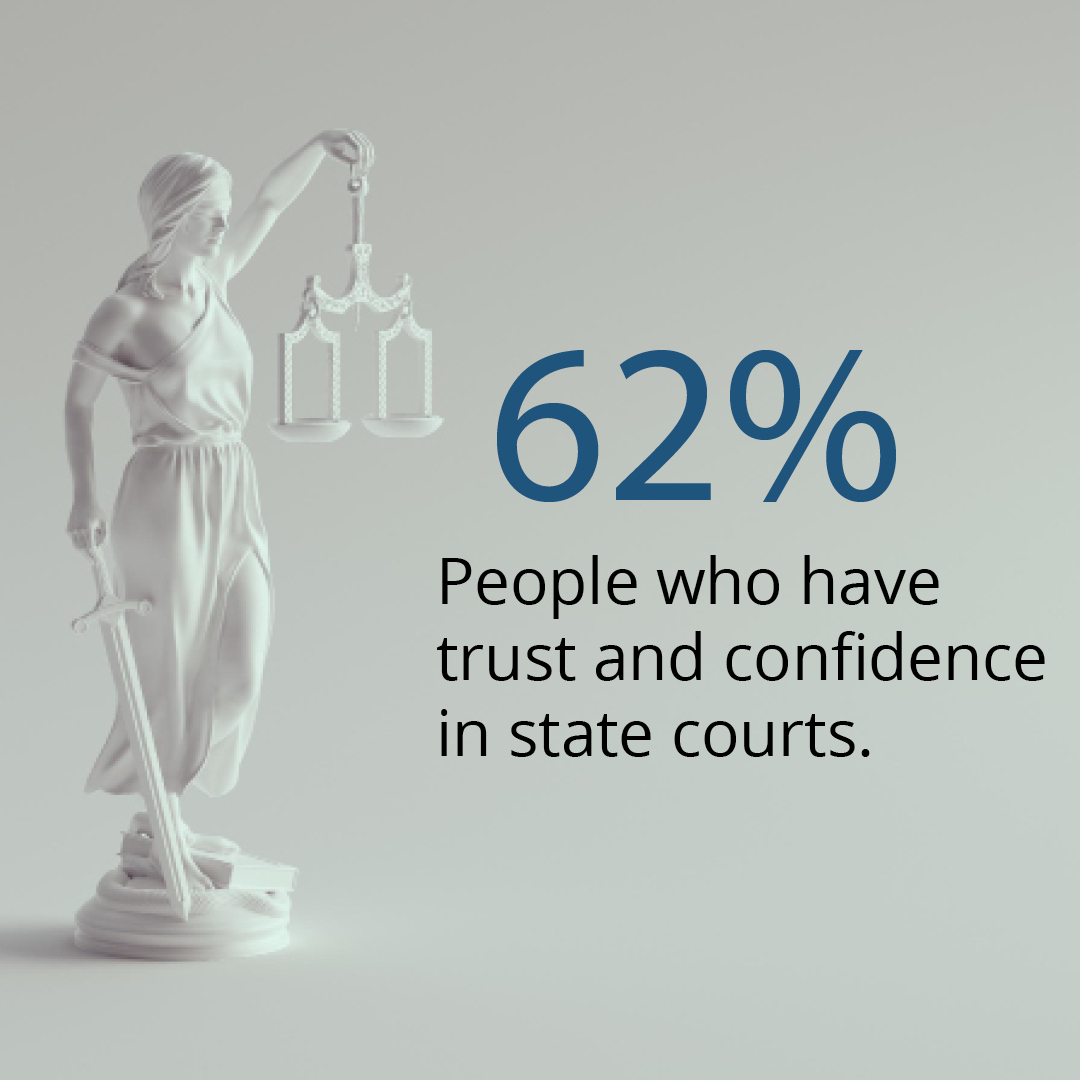
Sixty-two percent of registered voters responding to the 2025 State of the State Courts survey said they have a great deal or some confidence in state courts. The percentage was higher than the confidence reported for the executive and legislative branches of government.
In 2024, 63% of respondents conveyed a great deal or some confidence in state courts, and the number was 61% in the 2023 survey. The National Center for State Courts (NCSC), which conducted the surveys, stated that the similar percentage over a three-year period indicates public trust in state courts is stable. More than 95% of all court cases in the United States are filed in state judicial systems.
Young Adults Are Most Positive About Courts
Among different age groups, survey respondents between the ages of 18 and 29 showed the highest levels of optimism about state courts. The survey found that adult Generation Z voters were:
- Three points more likely to agree that state courts are fair and impartial (53% vs. 50%).
- Six points more likely to describe state courts as transparent and accountable (47% vs. 41%).
- Nine points more likely to say that state courts are both innovative (42% vs. 33%) and hardworking (64% vs. 55%).
Public Expresses Thoughts on Court Uses of AI
People were also asked about artificial intelligence, as the legal profession and the news media report discoveries in legal briefs and opinions of fake evidence and hallucinations, which are inaccurate or fabricated results generated by AI. A 51% majority think AI will be more harmful than helpful to courts because of an increased risk of mistakes and lessened trust in court decisions. Contrast that with 31% who said AI will help state courts work faster and more efficiently by cutting down on paperwork and reducing backlogs.
Education Improvements Suggested
Asked about solutions to address the complexity of court processes and the cost of legal assistance, and to improve access to justice, people strongly favored changes to legal education:
- 75% very much or somewhat supported encouraging law schools to do more to train lawyers to handle everyday legal problems.
- 75% very much or somewhat think that law students and new law graduates should have more experience in court with supervision.
- 66% very much or somewhat agreed with updating the bar exam to better measure real-world skills.
NCSC’s 2025 survey was an online poll of 1,000 registered voters. The survey has a margin of error of about 3%.