Court Orders Board to Clarify Decision on Financial Service Company’s Tax Refund Claim
The Court directed the Board of Tax Appeals to clarify a portion of a ruling it made on the sales taxes that CheckFree Services collected.
The Supreme Court of Ohio today directed the Ohio Board of Tax Appeals (BTA) to clarify a decision in which neither the justices nor the parties could determine how the board resolved the taxability of more than $320,000 in sales tax collected in connection with a financial services company’s disbursement-authorization service.
In a unanimous decision, the Supreme Court remanded the appeal of CheckFree Services Corporation to the BTA to clarify a portion of its ruling on the sales taxes the company collected. It also directed the board to conduct a more “refined analysis” of the services the company provided primarily to banks and determine whether they are subject to Ohio sales tax.
“The lack of clarity in the board’s decision frustrates meaningful judicial review by this court,” Justice Megan E. Shanahan wrote.
Writing for the Court, Justice Shanahan explained that of the nearly $1.9 million CheckFree sought in sales tax refunds, $322,320 was attributable to a service billed as “disbursement authorization.” The board’s six-sentence discussion of the service first stated that it shared similarities with debit authorization, which the board had found nontaxable. However, the fourth and fifth sentences stated that the automated service did not qualify as a nontaxable personal or professional service.
“We are not sure what the board decided,” the opinion stated, and noted that both CheckFree and the Ohio tax commissioner presented to the Court conflicting interpretations of the board’s decision.
Service Provider Seeks Tax Refund
CheckFree provides a broad range of financial services, serving two main classes of customers: financial institutions and merchants, to facilitate electronic transactions. CheckFree performed services for its customers, of which 90% was with banks and other financial institutions, and collected Ohio sales tax on the services provided. It then transmitted the taxes to the state.
CheckFree filed a tax refund claim with the tax commissioner for the period July 2011 to June 2015. The company claimed it was entitled to a refund because the services it provided were not specifically identified as being subject to the sales tax. The company indicated that once it receives a refund, it will refund its customers for the sales taxes CheckFree collected.
The tax commissioner denied the refund, and CheckFree appealed to the BTA.
Before the BTA, CheckFree witnesses described the services it provides to customers and presented a numerical breakdown of the charges for each service and the taxes it collected for each.
The company explained it provides two core services – debit authorization and disbursement authorization. There are ancillary services that support each core service, and the company broke down for the board the taxes collected for each service.
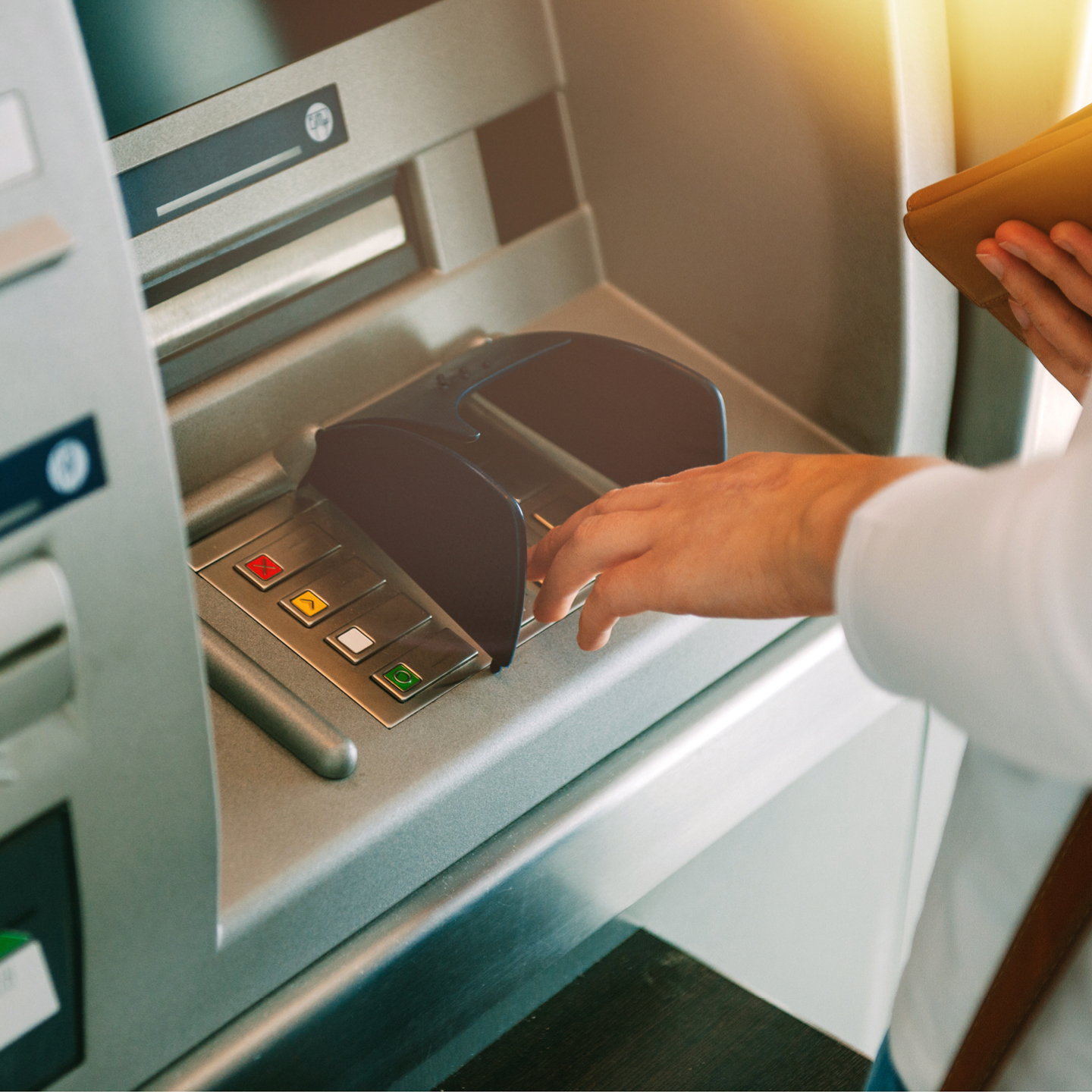
Debit authorization enables debit card users to withdraw money from an ATM or make purchases. The company maintained it was due a $434,701 refund for sales taxes collected for providing the service. The BTA analyzed the service under the Court’s 2008 decision in Marc Glassman, Inc. v. Levin, which concerned taxes a pharmacy incurred for engaging a service provider to determine whether a customer’s prescription was covered by insurance.
The board ruled that based on Marc Glassman, the debit authorization service was nontaxable, and the parties did not dispute the decision.
CheckFree asked for a refund of $532,409 for ancillary services charged in support of its debit authorization, including fraud detection and customer rewards services. The board declined to determine the taxability of those services, ruling that a “refined analysis” was required for each separately invoiced ancillary service. It remanded the issue to the tax commissioner to determine whether each charge was taxable.
The board then turned to the second core service, disbursement authorization. This service enables customers to pay bills they owe to a service provider, such as using a bank’s website to electronically pay a cellphone bill online. CheckFree indicated it was due a refund of $322,320 for taxes collected on the disbursement authorization, and another $604,982 for ancillary services it charged for supporting the disbursement authorization.
The board determined that disbursement authorization shared similarities with debit authorization but did not further explain how. The BTA also did not analyze disbursement authorization using the precedent of Marc Glassman, as it did with debit authorization. The board stated that the automated services did not qualify as nontaxable personal or professional services. However, it held open the possibility that the services could otherwise qualify as nontaxable and directed the tax commissioner to conduct a further review.
CheckFree appealed the decision to the Court, which must consider this type of appeal.
Supreme Court Analyzed Tax Exemption Requirements
Justice Shanahan explained Ohio imposes a sales tax “on each retail sale made in this state.” At issue in this case are taxes collected for providing automatic data processing (ADP), she noted.
The taxability of a transaction turns on the “true object” of the transaction as defined by R.C. 5739.01(B)(3)(e). A transaction is taxable when the consumer’s true object is to obtain work performed by computer systems, such as ADP, rather than to obtain nontaxable personal and professional services that are coupled with work performed by computer systems.
CheckFree maintained that its disbursement authorization service is a nontaxable financial service. It also argued that the ancillary services supporting its debit authorization and its disbursement authorization services are nontaxable.
“Given the board’s lack of analysis regarding the taxability of CheckFree’s disbursement-authorization service, we are not in a position to reach the merits of CheckFree’s argument,” the opinion stated.
The Court noted it was confused by the board’s decision and could not determine whether the BTA resolved the taxability of the disbursement authorization service. The Court noted it was “not alone” in its confusion, as CheckFree viewed the BTA’s ruling as not reaching a conclusion on the issue but instead remanding it to the tax commissioner for further review. The tax commissioner argued that the board had determined the service did not qualify as nontaxable and had remanded for the commissioner to determine the taxability of the ancillary services supporting disbursement authorization.
The opinion noted even if the tax commissioner is correct that the board found disbursement authorization did not qualify as nontaxable, the BTA did not indicate whether the service was taxable under R.C. 5739.01(B)(3)(e), and if so, why. Because the decision lacks clarity, the Court vacated the decision on disbursement authorization and remanded it to the BTA for a “clearer evaluation of how R.C. 5739.01(B)(3)(e) applies” to the service.
Regarding the ancillary services, the Court agreed with the BTA that each separately invoiced ancillary service must be independently evaluated under the true-object test to determine its tax treatment. The Court disagreed with the BTA’s decision to have the tax commissioner conduct the analysis.
The Court found that the record before the BTA was sufficiently developed for the BTA to conduct the analysis. CheckFree argued the Court had the evidence to decide that the company is entitled to a refund for the ancillary services. The Court declined, indicating that its role is to review the BTA's decisions, not to conduct the analysis in the first instance.
The Court also directed the BTA to review the ancillary services to determine whether they are taxable, and to expedite its consideration of the matter, “given that the refund claims concern tax periods dating back more than a decade.”
2024-1569. CheckFree Servs. Corp. v. Harris, Slip Opinion No. 2026-Ohio-3555.
 View oral argument video of this case.
Please note: Opinion summaries are prepared by the Office of Public Information for the general public and news media. Opinion summaries are not prepared for every opinion, but only for noteworthy cases. Opinion summaries are not to be considered as official headnotes or syllabi of court opinions. The full text of this and other court opinions are available online.
 PDF files may be viewed, printed, and searched using the free Acrobat® Reader
 Acrobat Reader is a trademark of Adobe Systems Incorporated.